

Across Minnesota, school district leaders are demonstrating that sustainable success is built through intentional leadership. While every district faces unique opportunities and priorities, the strongest organizations share a common characteristic: they create alignment between their vision, their people, and the systems that support their work.
At Studer Education, we have the privilege of partnering with districts throughout Minnesota that are committed to creating great places to work, learn, and succeed. Through those partnerships, we continue to see how leadership practices grounded in clarity, engagement, and continuous improvement create the foundation for organizational excellence.
The experiences of South St. Paul Public Schools, Faribault Public Schools, and Howard Lake-Waverly-Winsted Public Schools offer powerful examples of how districts are bringing these principles to life.
Building Alignment Around What Matters Most
One of the most important responsibilities of leadership is creating clarity around priorities. When employees understand where the organization is headed and how their work contributes to that vision, improvement efforts become more focused, coordinated, and impactful.
South St. Paul Public Schools recently engaged in a strategic planning process that brought students, staff, families, community members, and local leaders together to shape the future of the district. The result was a strategic framework centered around three pillars: Packer Performance, Packer Promise, and Packer Pride.
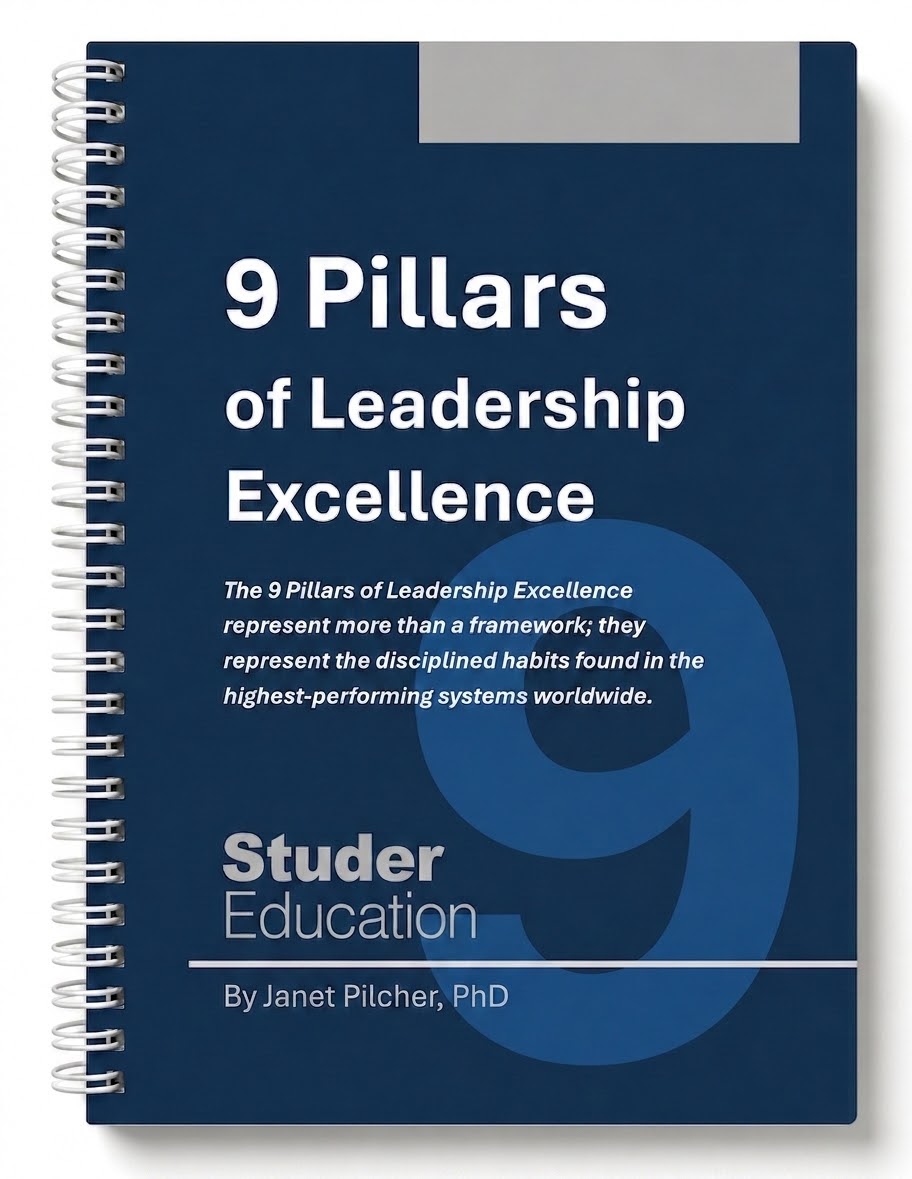
What makes the work particularly meaningful is the district’s commitment to connecting strategy to action. Strategic priorities cascaded to the district’s scorecard, which created alignment for departments and school improvement efforts. Leaders across the district engage in short-cycles of improvement to understand the impact of their efforts and adjust quickly. This reflects a core principle of Studer Education’s 9 Pillars of Leadership Excellence®: aligning goals, behaviors, and processes to achieve results.
When strategic plans become part of everyday decision-making, they create more than direction. They create momentum.
Strengthening Employee Engagement Through Meaningful Feedback
Great organizations recognize that employees are essential partners in continuous improvement.
Creating opportunities for staff members to share their experiences, insights, and ideas strengthens both culture and performance.
Faribault Public Schools embraced this approach through the use of Studer Education Employee Experience Surveys. The district’s leaders used a structured survey results rollout process to engage employees in meaningful conversations about their experiences and gather valuable insights from across the organization. By listening to employee perspectives and examining patterns within the feedback, leaders gained a deeper understanding of organizational strengths, opportunities for growth, and areas that could further enhance the employee experience.
The district’s work reflects another important principle of organizational excellence: what is measured receives attention. By intentionally gathering feedback and using it to inform decision-making, Faribault continues to strengthen its culture, support employee engagement, and advance its commitment to continuous improvement.
Leadership Engagement Creates Stronger Connections
While strategic plans and surveys are important, culture is ultimately built through relationships. The daily interactions between leaders and those they serve shape how people experience the organization and connect to its mission.
Howard Lake-Waverly-Winsted Public Schools has demonstrated the value of intentional leadership engagement through the practice of leader rounding. These structured conversations create opportunities for leaders to connect directly with employees, recognize contributions, gather feedback for improvement, and better understand the experiences of staff throughout the district.
As a dedicated user of Studer Education’s K12 Rounding platform, Howard Lake-Waverly-Winsted has embedded leadership engagement into the daily work of district leaders. Rather than relying solely on formal surveys or annual feedback cycles, leaders maintain ongoing conversations that strengthen trust, increase visibility, and create meaningful opportunities for continuous improvement.
Leader rounding reflects several principles within the 9 Pillars of Leadership Excellence®, including recognizing bright spots, valuing employees, and continuously improving organizational performance. These conversations help leaders stay connected to the work while creating opportunities to celebrate successes and strengthen relationships.
Over time, leadership engagement becomes more than a practice. It becomes part of the culture.
Leadership Excellence in Action Across Minnesota
While each of these Minnesota districts has focused on different priorities, a common theme connects their work. Strategic planning, employee engagement, leadership development, communication, and performance monitoring are not viewed as separate initiatives, but rather interconnected systems that work together to support organizational success.
This systems-based approach is at the heart of continuous improvement. Organizations achieve greater results when they intentionally gather feedback, analyze information, identify priorities, take action, and monitor progress. Improvement becomes part of how the organization operates and how leaders support the people they serve.
The work taking place in South St. Paul Public Schools, Faribault Public Schools, and Howard Lake-Waverly-Winsted Public Schools reflects a broader commitment to leadership excellence across Minnesota. These districts are investing in systems that create alignment, strengthen culture, engage employees, and support continuous improvement.
At Studer Education, we believe sustainable improvement occurs when leaders intentionally connect strategy, culture, leadership, and execution. The partnerships highlighted here demonstrate the impact of that approach. Their experiences provide valuable examples for school districts throughout Minnesota that are working to strengthen organizational performance while remaining focused on what matters most: creating outstanding experiences and outcomes for students, employees, families, and communities.